OT Security for the Physical World.
Deployment
Passive · zero touch on controllers
Coverage
Modbus · DNP3 · S7 · OPC UA · 61850
Assurance
IEC 62443 · NERC CIP · NIS2
Time to value
Live asset picture in days
Why Physics-Informed AI
Every platform reads the network. Ours understands the process.
A firewall rule cannot tell you a turbine will trip. A CVE score knows nothing about your interlocks. OTSecurity.ai pairs protocol intelligence with a physical model of your plant — setpoints, tolerances, dependencies, and safety functions — so risk is measured in consequences instead of severity points.
01 / PROTOCOL
It speaks industrial.
Deep inspection of the protocols that actually run plants — function codes, register writes, GOOSE messages, program downloads — not a generic IT signature set pointed at OT.
02 / PHYSICS
It knows what breaks.
A model of the process itself — flows, loads, ramp rates, safe operating envelopes — lets the platform judge whether a command is merely unusual or genuinely dangerous.
03 / CONSEQUENCE
It ranks by outcome.
Ten thousand findings collapse into the handful that can move a physical outcome — the single segmentation fix that removes fifty routes to a breaker.
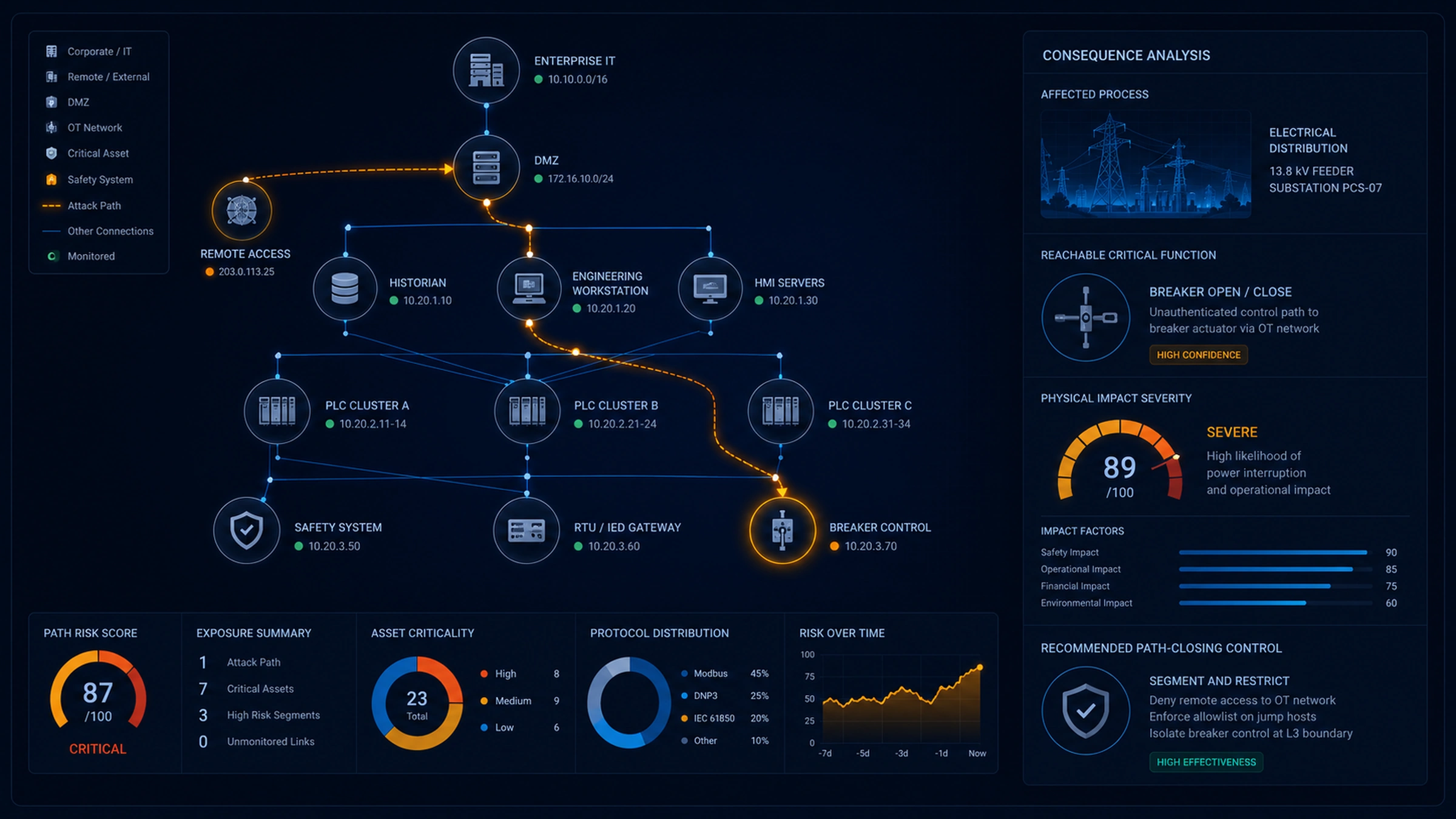
Operational technology is the physical world's operating system.
Substations, treatment plants, production lines, pipelines, rail. When these systems fail the consequences are physical. OTSecurity.ai treats them as one connected estate — observable, modelled, and defensible from field device to enterprise edge.
Built for engineering reality
Passive, protocol-aware observation. No agents on controllers, no active scans against fragile devices, no interruption to operations.
Grounded in consequence
Every finding is weighed against what it could do to the process — not just how it scores on a generic severity scale.
Aligned with the standards
IEC 62443, NERC CIP, NIS2, and NIST CSF — evidenced from the live environment rather than assembled in spreadsheets.
The platform
From first packet to board-ready proof.
Six disciplines running as one continuous loop. Select a stage to see what the platform is doing.
Stage {{ capN }}
{{ capTitle }}
{{ capBody }}
A dense environment, made legible.
Thousands of devices, zones, and dependencies resolve into one intelligence graph — where an attack path can be seen, traced, and closed before it reaches the process.
Industries
Different physics. The same discipline.
Every sector runs on different processes, protocols, and regulation. One operational world, seen through each of them.
{{ sectorTitle }}
{{ sectorDesc }}
- Estate
- {{ sectorEstate }}
- Crown jewel
- {{ sectorCrown }}
- Standards
- {{ sectorMeta }}
Outcomes
Security that operations can live with.
The measure of an OT security programme is not how many alerts it produces. It is whether the process keeps running — and whether you can prove it is protected.
A defensible inventory in days
From first network tap to an asset picture engineering will sign off — without a single active scan.
Alerts weighted by consequence
Responders see which process, which zone, and what sits downstream — before they open the ticket.
Audit preparation in hours
Evidence for IEC 62443, NERC CIP, and NIS2 generated continuously from the live environment.
Security and engineering on one page
One model of the environment both teams recognise — so fixes get scheduled instead of disputed.
Field note
A maintenance laptop with a route to breaker control, open for four years. Nobody had drawn that line before.
Representative of what attack-path modelling surfaces on a first pass across an unmapped estate. Named references will replace this note once cleared for publication.
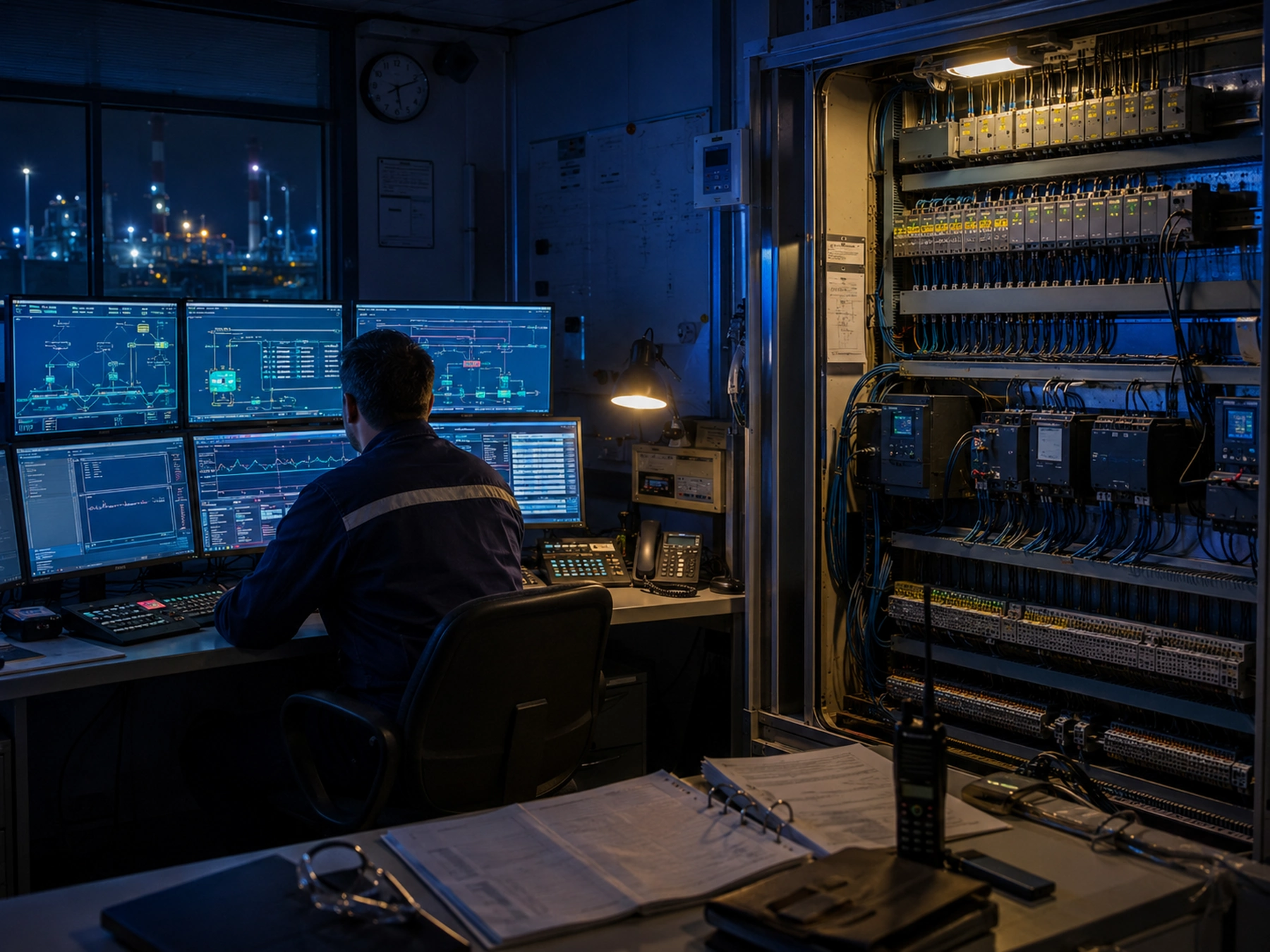
Research
Original work for defenders of industrial systems.
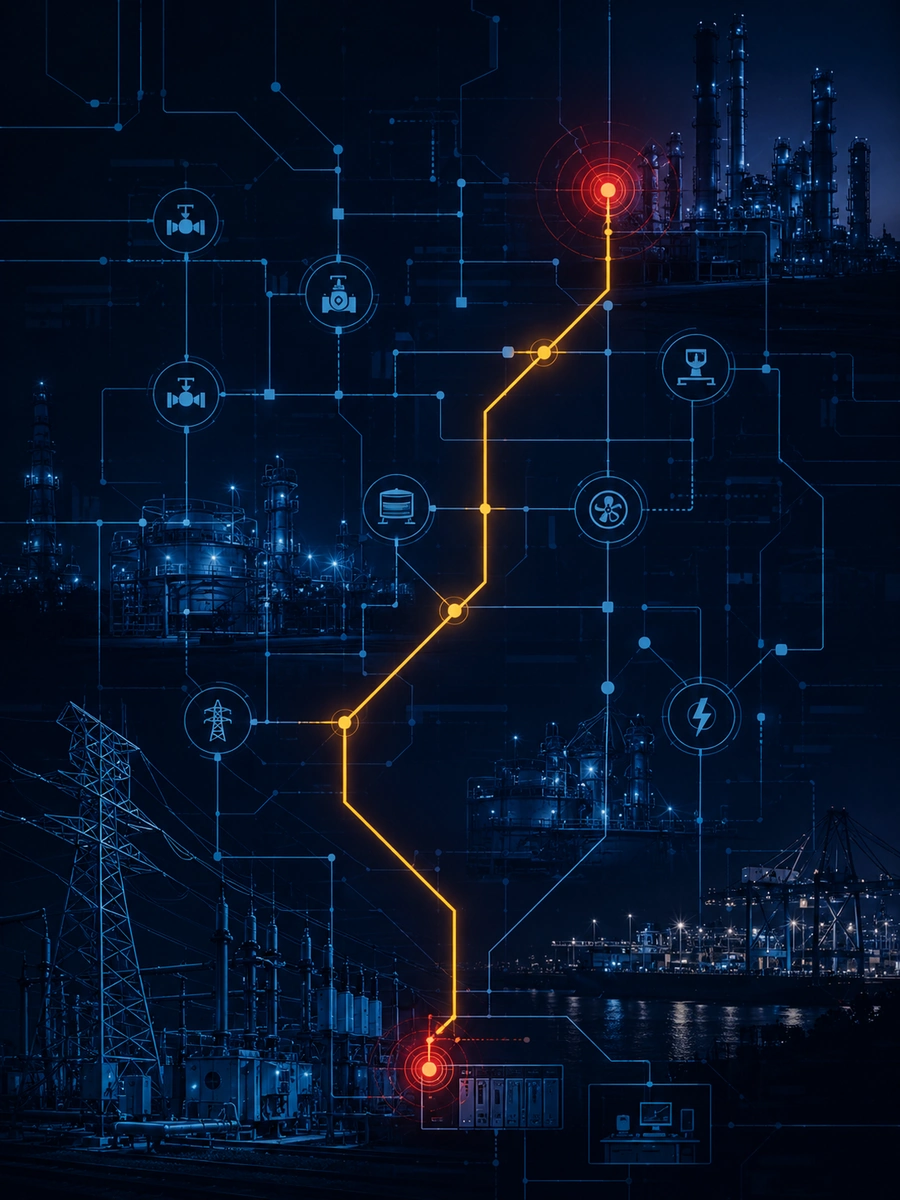
The State of OT Threat Activity, 2026
Campaign patterns, initial-access trends, and what they mean for defenders of industrial networks.
Get in touch →
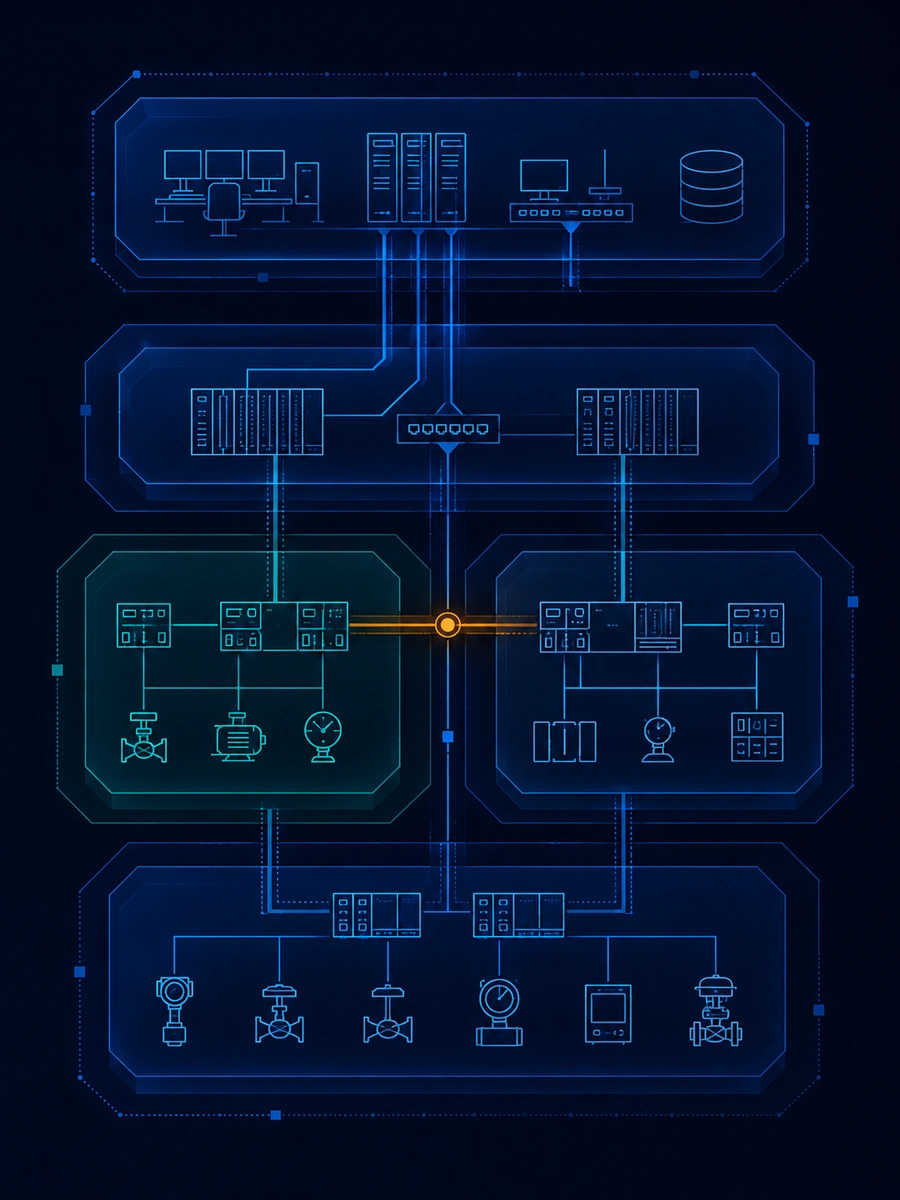
Zones and Conduits in Practice
A working IEC 62443 segmentation guide, written from real reference architectures.
Get in touch →
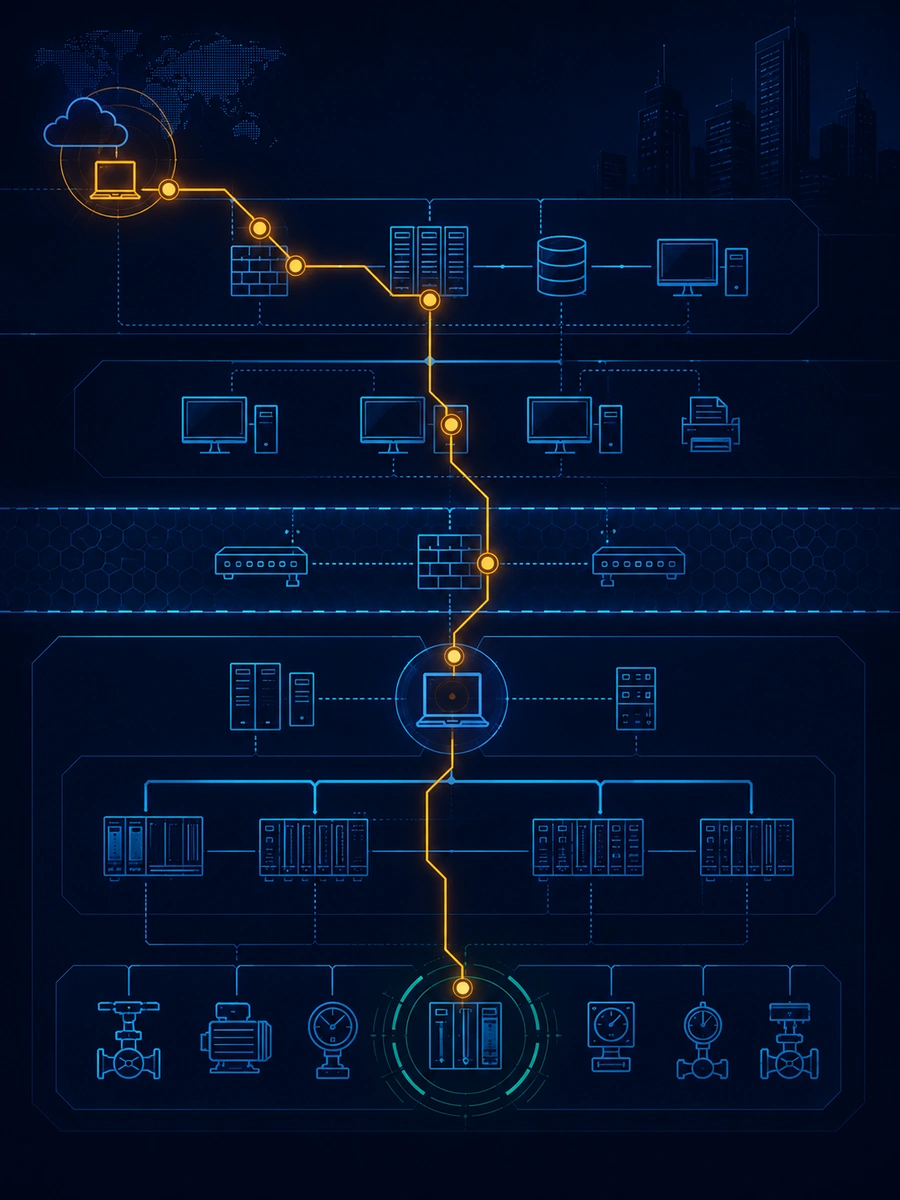
Mapping Attack Paths Across the IT/OT Boundary
How adversaries actually traverse the boundary — measured across anonymised environment graphs.
Get in touch →
OT security, answered
Questions operators ask us first.
What is OT security? +
OT security protects the operational technology that runs physical processes — PLCs, RTUs, drives, SCADA, and safety systems across power, water, manufacturing, oil and gas, and transport. Unlike IT security, its first duty is keeping the physical process safe and available.
How is AI used in OT security? +
Most tools use AI to learn what normal looks like on the network and flag what deviates. Physics-Informed AI adds the process itself to the model — setpoints, tolerances, interlocks, and dependencies — so the platform can classify assets, map attack paths, judge whether a command is dangerous rather than merely unusual, and rank findings by physical consequence. It also drafts the evidence auditors ask for. It stays advisory throughout: the platform observes and explains, and never issues a control action.
How is OT security different from IT security? +
IT security optimises for confidentiality and can patch or reboot almost at will. OT security optimises for safety and availability on equipment that may run for decades, cannot be scanned aggressively, and where a wrong control action has physical consequences measured in outages, spills, or injuries.
Does passive monitoring affect a control network? +
No. OTSecurity.ai observes mirrored traffic from SPAN ports or network taps. It sends no probes to controllers, installs no agents on field devices, and adds no load to the control network. Nothing the platform does can issue a command.
What does Physics-Informed AI actually mean? +
It means the model understands the process, not just the packets: setpoints, tolerances, interlocks, dependencies, and safety functions. A write that moves a valve two percent inside its envelope is noise. The same write during a startup sequence may not be. Ranking by physical consequence removes most of the volume generic severity scoring produces.

See what is really on your network.
Walk through your architecture with an OT security engineer. No slideware — a working session on your environment and your questions.